

New Blog

Post image

You may have noticed, that I had not much time to blog about something in the past months… One thing was, that we all need money, so I had to work very much. And as some of you know, I’m also studying in the evenings.

Long story short, I’ve restarted blogging with a new engine and new design once again. Key is (not just to use new swag), to simplify blogging for me, so I can put more time in the articles and less in managing the blog itself. I’m not much of a frontend developer or a designer, so the design will maybe not impress you ;)

Technically, the new blog is based on Hugo and GitHub Pages, and you can find it on frne.github.com.

I will port some of the older articles and of course add new ones.

Big news: Currently for hire!

If you are looking a motivated Java/Scala dev in the area of Zurich (Switzerland), we maybe should talk ;)

You May Also Like

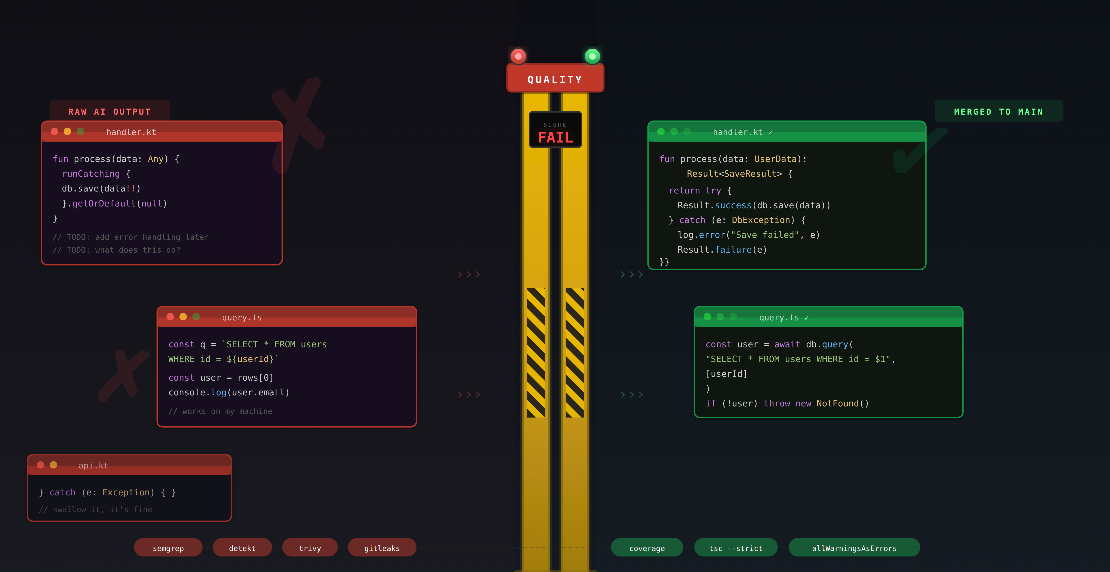
Raising the Bar: Quality Gates for AI-Generated Code

Raising the Bar: Quality Gates for AI-Generated Code

AI coding tools let your team ship faster than ever. That is the pitch, and it is not wrong. But nobody talks about what you are shipping. Right now, most teams use these tools to produce broken software at unprecedented speed.

Security holes, silent data corruption, exception handling that hides failures. None of this shows up in your sprint velocity. It shows up when the product collapses under technical debt, or when a customer hits an unhandled edge case in production. If your team uses AI coding tools without guardrails, you are not moving fast. You are accumulating landmines.

Read More
The 9 Talents in Software Teams

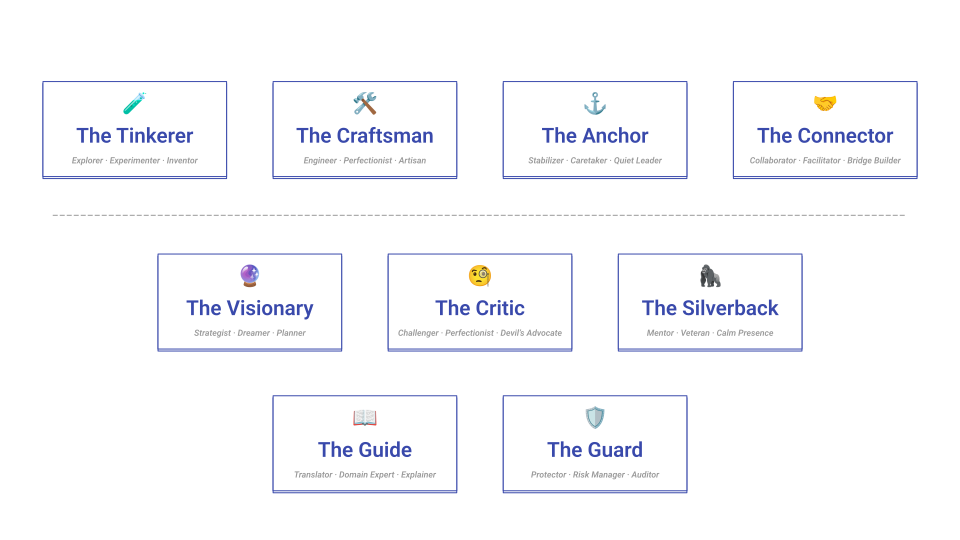
The 9 Talents in Software Teams

Job titles like “Senior Engineer” or “Principal Engineer” don’t explain how someone actually contributes to a team. Counting a candidate’s years of experience doesn’t tell you whether they’ll bring stability in a crisis, explore new ideas, or quietly hold a group together when things get messy.

After leading different engineering teams and organizations, I’ve seen the same profiles appear again and again, regardless of title or tech stack. These profiles shape how teams perform, where they get stuck, and how they grow. Over time, I began to think of them as archetypes of engineering talent: Patterns of behavior and impact that show up in every healthy software team.

Read More